Review: Christmas Gate Pop Up Card for Holiday Crafts
As a designer who spends more time staring at stitch simulations than actual holiday decorations, I approach every new machine embroidery design with a mix of excitement and skepticism. The market is flooded with seasonal files that look great in a thumbnail but fall apart under the needle. So, when I pulled up the Christmas Gate Pop Up Card by Bella Carta Design, my first instinct wasn't to click "buy," but to analyze its potential in a real-world production environment. This isn't just another digital asset; it's a structural concept that demands precision.
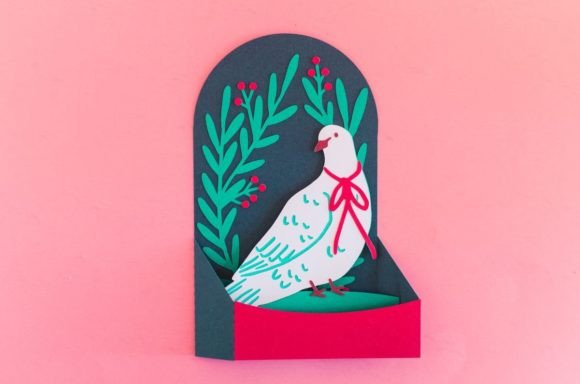
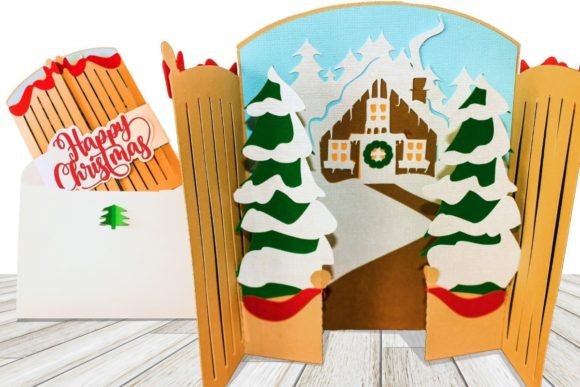
The first impression of this 3D SVG template is its clever engineering. Unlike standard flat motifs, this design relies on the interplay of layers to create depth. The visual personality here is whimsical yet structured, evoking that classic storybook feeling of opening a gate to reveal a surprise. For a crafter or Etsy seller, this mood is gold. It transforms a simple handmade product into an interactive experience. However, from a technical standpoint, the "pop-up" nature implies specific constraints regarding fabric choice and assembly that we need to address before committing to a client order.
Visualizing the Finished Product in Real Scenarios
Let's move beyond the screen and imagine this design in action. I recently had a request for a high-end personalized gift set for a boutique hotel's holiday welcome packages. They wanted something that felt bespoke, not mass-produced. My mind immediately went to the Christmas Gate Pop Up Card. While the product description highlights its use as a card template, an experienced eye sees versatility. Imagine this design adapted as a central motif on a heavy-weight linen tote bag design or perhaps as a detailed appliqué on a velvet pillow cover.
In a small shop product context, this design shines because it tells a story. If you are creating custom apparel, specifically a limited-run sweatshirt embroidery collection, the gate mechanism offers a unique selling point. You could embroider the frame on the garment and have the inner "reveal" layer as a separate patch or even a fabric insert. For baby embroidery projects, like a nursery wall hanging, the soft curves and festive theme fit perfectly, provided the stitch density is managed correctly to keep the fabric pliable enough for a child's room.
The true test for any digital embroidery file is how it translates to customer trust and brand consistency. Using a design with this level of dimensional intent signals to your buyer that you care about detail. It elevates the perceived value of your finished product. Whether you are selling at a craft fair or through an online storefront, the "wow" factor of a 3D element can justify a higher price point compared to standard flat stitching.
Technical Considerations for Stitching Success
Here is where we need to be brutally honest about the challenges. The Christmas Gate Pop Up Card is described as having two pop-up gate doors. In the world of embroidery, moving parts or layered illusions require meticulous planning. If you attempt to stitch this directly onto a stretchy fabric like a thin cotton t-shirt without proper reinforcement, you risk distortion. The stitch density in the gate areas needs to be balanced; too dense, and the fabric puckers; too light, and the structure collapses.
When working with textured fabrics or dark backgrounds, thread color contrast becomes critical. A design relying on depth can easily get lost if the thread colors blend into the base material. I always recommend running a black-and-white mockup first to check the tonal separation. Furthermore, if you are adapting this for curved surfaces like caps or hats, the geometry of the "gate" might warp. This design is likely best suited for flat hoops or items that can be stabilized rigidly, such as aprons, kitchen towels, or structured patches.
One major consideration is the hoop size. Complex 3D illusions often require larger hoops to accommodate the framing and the necessary stabilizer margins. Before purchasing, verify the dimensions provided by Bella Carta Design. If the design is too large for your standard 4x4 hoop, you may need to invest in a larger machine or consider splitting the design, which can compromise the seamless look of the pop-up effect. Also, pay close attention to tiny lettering or intricate corners within the gate reveal; these areas are prone to bird-nesting if the machine tension isn't dialed in perfectly.
Strategic Use for Commercial and Personal Projects
For the craft business owner, scalability is key. Can you produce ten of these in a day? The complexity of a 3D-style design suggests a slower production rate. This makes it ideal for premium, made-to-order items rather than high-volume bulk runs. It works exceptionally well for holiday embroidery gifts where the recipient expects something special. Think of wedding gifts for December marriages or corporate branding for end-of-year bonuses.
If you are an applique design enthusiast, this template offers a fantastic framework. You could use felt or wool blends for the gate doors to enhance the tactile feel, contrasting them with a satin stitch border for definition. The combination of satin stitch, fill stitch, and potentially running stitch details will determine the final texture. Always test on scrap fabric that matches your final material. What looks good on quilting cotton might behave differently on fleece or denim.
Regarding licensing, this is non-negotiable. Since this is a template by Bella Carta Design intended for creating physical cards, using it for commercial embroidery projects requires a clear understanding of the terms. Are you allowed to sell the stitched item? Can you modify the SVG for digital resale? Never assume. Check the license agreement explicitly to protect your design assets and avoid legal headaches down the road.
Final Verdict on Design Utility
The Christmas Gate Pop Up Card is a standout piece for those willing to put in the prep work. It is not a "drag-and-drop" solution for beginners looking for instant gratification. Instead, it is a tool for creators who understand the nuances of stabilizer selection, thread weight, and fabric grain. When executed correctly, it delivers a level of sophistication that generic designs simply cannot match.
My advice is to start small. Order the file, stitch a sample on a neutral fabric texture, and evaluate the structural integrity of the "gates." Does it lay flat? Does the reveal work as intended? Once you master the technique, this design can become a signature element in your commercial embroidery portfolio. It bridges the gap between traditional paper crafting and textile art, offering a fresh avenue for printable mockup presentations and tangible, memorable gifts. Just remember: the magic is in the execution, so respect the materials, check your settings, and let the design do the talking.