Review: Chinese New Year Pop Up Craft Template for Embroidery
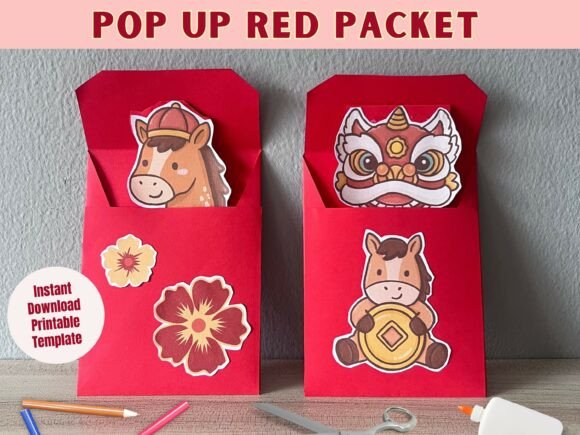
As a designer who spends half my life staring at stitch maps and the other half managing client expectations, I approach every new file with a mix of curiosity and skepticism. When I first pulled up the Chinese New Year Pop Up Craft Template, my initial reaction wasn't to reach for the hoop, but to pause and consider the intent. This is marketed primarily as a paper craft—a 3D SVG for creating red packet pop-up cards and kids' activities for the 2026 Lunar New Year. However, in our world of craft business and handmade goods, we often look beyond the primary label to see if a design asset can be repurposed into a tangible finished product. Can this flat, cut-and-color template translate into a robust machine embroidery design? Let's break down how this specific aesthetic holds up when moved from paper to fabric.
First Impressions: Mood and Visual Personality
The visual language of the Chinese New Year Pop Up Craft Template is undeniably festive. It carries that classic Lunar New Year energy—bold, celebratory, and rooted in tradition. The layout typically features elements associated with prosperity: lanterns, coins, or stylized characters meant to evoke good fortune. For an embroidery project, this mood is perfect. It creates an immediate emotional connection, which is exactly what you want when selling a personalized gift or a boutique holiday item.
However, because this originates as a Pop-Up Cards template, the lines are designed for cutting and folding, not necessarily for stitching. The "3D SVG" nature implies sharp angles and distinct layers. In embroidery, sharp internal corners can be tricky without proper underlay or satin stitch management. If you are planning to digitize this yourself or use a converted version, you need to pay close attention to how those paper-craft folds translate into stitch density. A fold on paper is crisp; a fold in thread on a sweatshirt needs careful planning to avoid puckering.
Real-World Application: From Paper to Apparel
Let's imagine a real scenario. You run a small shop product line focusing on seasonal custom apparel. A client wants a limited-run collection of tote bags for the 2026 Lunar New Year. They love the idea of the pop-up aesthetic but want it embroidered. Here is where the Chinese New Year Pop Up Craft Template becomes interesting. If used as a reference for an applique design, it could shine. Imagine using red felt for the main shapes and gold metallic thread for the outlines. This mimics the paper craft's layered look while adding the texture of a handmade product.
For baby embroidery, such as a onesie or a nursery pillow cover, the softness of the design works well, provided you simplify the details. Babies don't need intricate fill stitch areas that might feel scratchy. Instead, using a clean running stitch or a light satin column to outline the key motifs from the template would create a charming, high-end look. For a tote bag design, you have more freedom. Canvas or heavy cotton can support denser stitching, allowing you to capture more of the template's original complexity. An embroidered patch made from these elements could also be a fantastic add-on sale for your Etsy store, offering customers a way to decorate their own jackets or hats later.
Navigating Technical Challenges
While the aesthetic is strong, we must discuss the technical realities of moving a paper template to fabric. The Chinese New Year Pop Up Craft Template was likely optimized for scissors and glue, not needles and bobbins. If you are working with an embroidery file derived from this source, you need to be vigilant about hoop size. Many paper templates are large; ensure your design fits within your machine's maximum area without losing scale integrity.
Fabric choice is critical. On textured fabrics like Terry cloth or heavy knits, fine details from the template might get lost. Conversely, on thin or stretchy fabric, dense areas could cause distortion. If you are attempting this on a curved surface like a cap, the structural rigidity of the paper design might fight against the curve of the hat. In these cases, I recommend simplifying the design. Remove tiny lettering or overly complex decorative accents that rely on paper folding to make sense. Remember, thread has volume. What looks flat on a screen will have height on a garment.
Stabilizer selection is non-negotiable here. Because the original concept relies on structural integrity (the "pop-up" mechanism), your embroidery needs to mimic that stability without the glue. Use a cut-away stabilizer for garments that will undergo frequent washing, like kitchen towel sets or aprons. For a one-off holiday gift on a woven fabric, a tear-away might suffice, but always test first.
Commercial Viability and Brand Consistency
For Etsy sellers and creative entrepreneurs, the value of a design lies in its versatility and the trust it builds with buyers. Using the Chinese New Year Pop Up Craft Template effectively can elevate your brand. If executed with high-quality thread colors—perhaps sticking to traditional reds, golds, and blacks—you signal professionalism. Customers associate clean stitching and thoughtful design application with quality. A sloppy conversion of this template, however, with broken stitches or poor color contrast, can damage your reputation.
Consider the "giftability" factor. Items featuring this design, whether it's a holiday embroidery piece on a blanket or a custom patch, serve as excellent conversation starters. They show cultural awareness and trend relevance for 2026. However, you must verify the licensing. Just because a file is available as a "print and color" activity does not automatically grant commercial rights for physical goods. Before listing items on your shop or using this as a digital embroidery file for clients, confirm the terms. Can you sell the finished physical item? Can you sell the digitized version? These are questions that protect your craft business from legal headaches.
Practical Designer Notes for Success
To ensure your project succeeds, follow these practical steps before committing to production:
- Test on Scrap Fabric: Never stitch a new design directly on the final product. Test the Chinese New Year Pop Up Craft Template on a scrap piece of the actual fabric you intend to use.
- Check Color Contrast: Ensure your thread colors pop against the fabric background. Dark threads on dark fabric will hide the beautiful details of the design.
- Review Stitch Density: If the design feels too heavy, reduce the fill density in your software to prevent fabric stiffening.
- Inspect Small Details: Look closely at tiny corners and lettering. These are the first places to fail if the digitizing isn't optimized for fabric.
- Mockup Verification: Create black and white mockups to check the value structure. Does the design read clearly without color?
- Licensing Check: Re-confirm that the "Easy print, colour, cut and decorate" license allows for commercial embroidery applications.
In conclusion, the Chinese New Year Pop Up Craft Template offers a vibrant foundation for 2026 holiday projects. While it starts as a paper craft, with thoughtful adaptation regarding stabilizer, fabric choice, and stitch types, it can become a standout element in your commercial embroidery portfolio. Whether you are making a single personalized gift or a run of boutique merchandise, the key is respecting the medium. Treat the thread with the same care you would treat the paper, and your finished product will reflect that dedication.